
Government's forest plans not practical or meaningful
Following Nature Minister Mary Creagh's announcement of a new forest in the Oxford-Cambridge Growth Corridor, campaign group Stop The Arc (STARC) says it's struggling to understand how the proposal will work. 'The government says it wants to build one million homes between Oxford and Cambridge. It now suggests that all those new homes will be within a 10-minute walk from a single new forest. That seems to be a physical impossibility,' says Charles Pither, STARC Chair. 'The idea that the three new forests so far proposed for England will employ 14,000 people is also questionable. Planting is seasonal work, and there's not much work to do once that's done. England's biggest forest, Kielder Forest, employs fewer than 700 people, directly and indirectly. It's difficult to see what most of those 14,000 new workers will actually be doing.'
STARC Trustee Nick Burton is similarly sceptical. 'The Wildlife Trusts have very recently launched a proposal called 100 Miles Wilder, a plan for preserving and enhancing the existing nature resources between Oxford and Cambridge. It shows an existing abundance of nature across the corridor region, and STARC has long campaigned for the protection of that unique resource, which is already on the doorstep of planned development. It makes no sense to obliterate the existing natural capital of the corridor, in order to create a brand-new forest.'
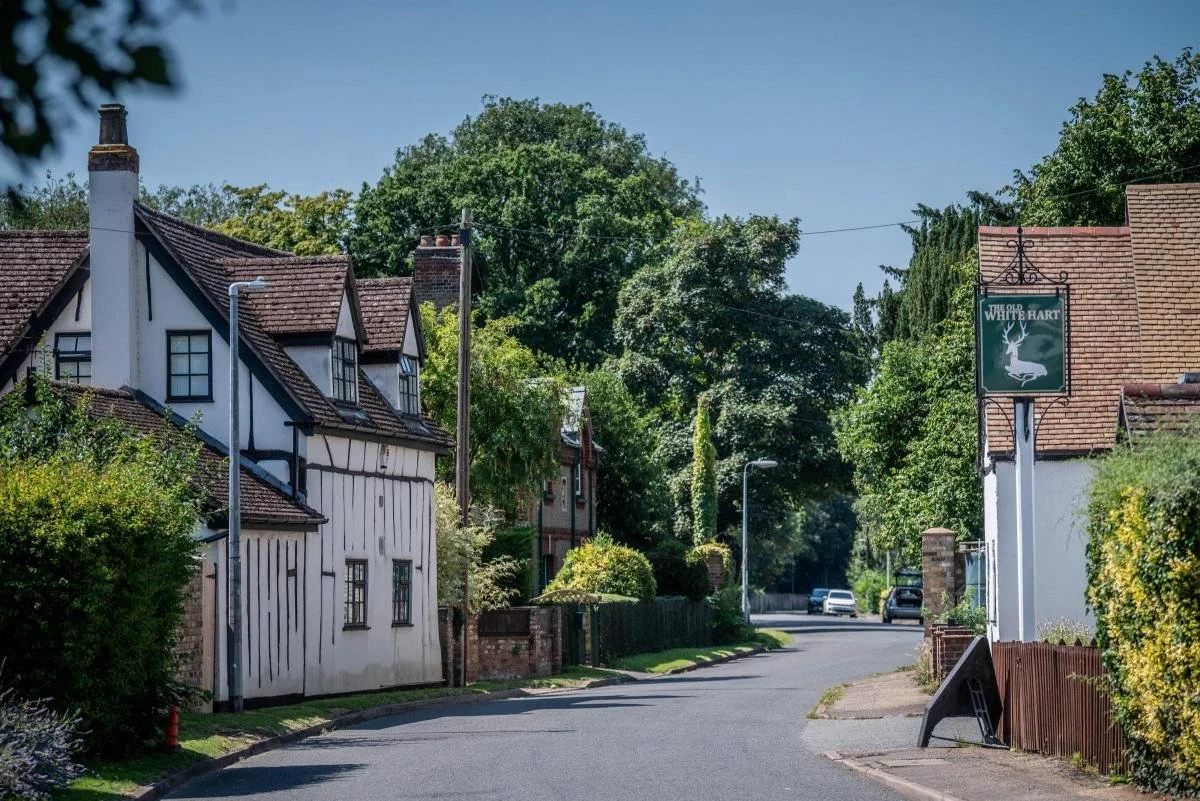
In addition to the forest, the government plans to increase the number of houses in the village of Tempsford from 300 to 40,000.
Unless, of course, there's a need for the UK to have something positive to say at COP30, at which, coincidentally, a headline issue is deforestation. STARC suggests the Ox-Cam Corridor Forest is little more than a last-minute 'something to say' for PM Sir Keir Starmer at COP30, a helpful offset to the UK government's apparent retreat from other Net Zero commitments. Burton says, 'This government continues to support the destruction of existing forests, including ancient woodlands, in order to build HS2 and East West Rail. So it's a bit rich to hear them now talking about using trees to provide, as the Minister says, “beautiful locations where builders want to build”.'
STARC also suggests that the squeeze on land in the Oxford-Cambridge Growth Corridor is becoming unrealistic. 'We're losing agricultural land to solar farms at a very rapid rate. Housing and infrastructure need more land. A forest large enough to be within 10-minute walk of every new home in the area will simply wipe out what's left of the agricultural land in the region—and the land between Bedford and Cambridge is some of the best growing land in the country. Converting it into a forest could be enough to tip the UK into negative food security,' says Nick Burton.
STARC questions the choice of the Ox-Cam Growth Corridor for the new forest, suggesting that the government is concerned to offset the logical and forceful antipathy to plans for excessive development in the region. 'Given the relatively rich natural environment that already exists in the corridor, one wonders if there aren't more deserving locations for foresting, such as any of the nine proposed new towns that are not within the Ox-Cam corridor,' Burton said. 'The minister talks about “creating places that are lovely for people to live in”, one wonders if she's simply talking dreamily about featherbedding for the already affluent south east.'
STARC's William Harrold says 'The only possible linkage between the Ox-Cam Growth Corridor economic project and building a forest is a bit of spontaneous COP30-prompted greenwash. Who ever came up with this idea is just trying to fob off objections from local people to building a million houses in the arc.
'We're not taking the Ox-Cam Forest idea seriously, ‘says Pither. 'It's a half-baked hope for a headline, no more,' he said. ''But if it does turn out to be serious, there are many questions to be asked. Is this a forest belt, a new kind of green belt? What are its protections? What is its lifespan? Who will actually pay for it? The government won't even make developers to pay 30p each for a swift brick in every new home. How will the plan relate to the local nature recovery plans already being implemented by the local authorities—who already have tree planting programmes, with statutory targets? The nature minister rightly cites Labour's vision for the early garden cities, and Milton Keynes is a good example of bringing nature and community together in a practical and meaningful way. This new notion of a huge, enchanted forest is neither practical nor meaningful.'
'We're not taking the Ox-Cam Forest idea seriously, ‘says Pither. 'It's a half-baked hope for a headline, no more,' he said. ''But if it does turn out to be serious, there are many questions to be asked. Is this a forest belt, a new kind of green belt? What are its protections? What is its lifespan? Who will actually pay for it? The government won't even make developers to pay 30p each for a swift brick in every new home. How will the plan relate to the local nature recovery plans already being implemented by the local authorities—who already have tree planting programmes, with statutory targets? The nature minister rightly cites Labour's vision for the early garden cities, and Milton Keynes is a good example of bringing nature and community together in a practical and meaningful way. This new notion of a huge, enchanted forest is neither practical nor meaningful.'